Echocardiography of the heart What is echocardiography?
How does echocardiography work?
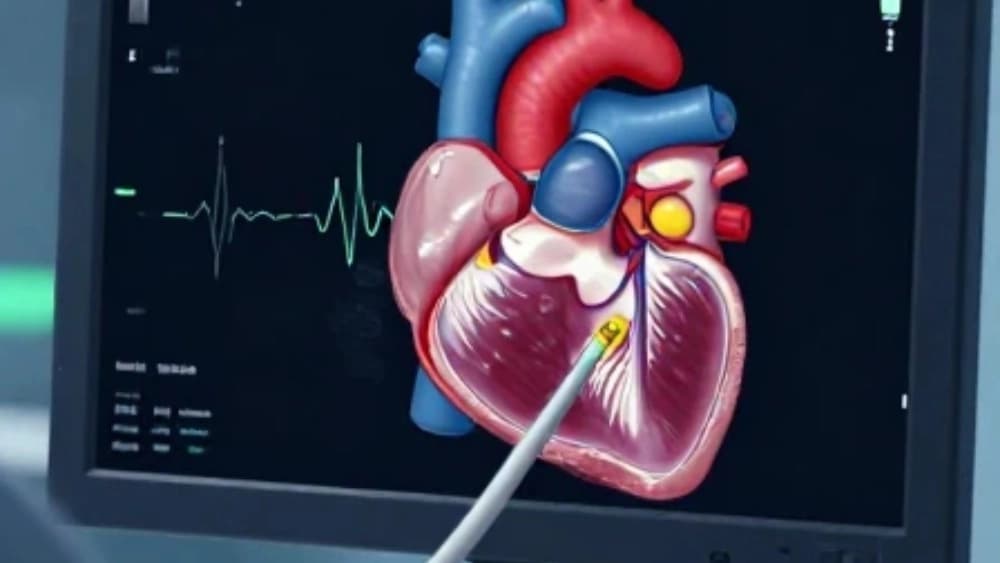
Echocardiography is based on the reflection of sound waves. In this method, the echo machine sends high frequency sound waves towards the heart. These waves are reflected after hitting different tissues of the heart, and the machine displays live images of the heart's movements on the monitor. Through these images, the doctor can check the thickness of the heart walls, the size of the cavities, the function of the valves, and the speed of blood flow.
Why is echocardiography of the heart performed?
Echo heart is used as one of the important diagnostic tools in heart diseases. The main purpose of echocardiography is to evaluate the structural and functional state of the heart. Doctors may recommend echocardiography for the following:
Check for abnormal heart sounds or murmurs
Check for symptoms of heart failure such as shortness of breath or swollen legs
Evaluation of heart valve function
Diagnosis of the presence of blood clots in the cavities of the heart
Examination of the condition after heart attack
Controlling the condition of patients after heart surgery
Types of heart echocardiography
There are different types of echocardiography, each of which is used for a specific purpose. Familiarity with the types of echocardiography helps patients to better know what to expect when visiting a doctor.
1. Transthoracic echocardiography (TTE)
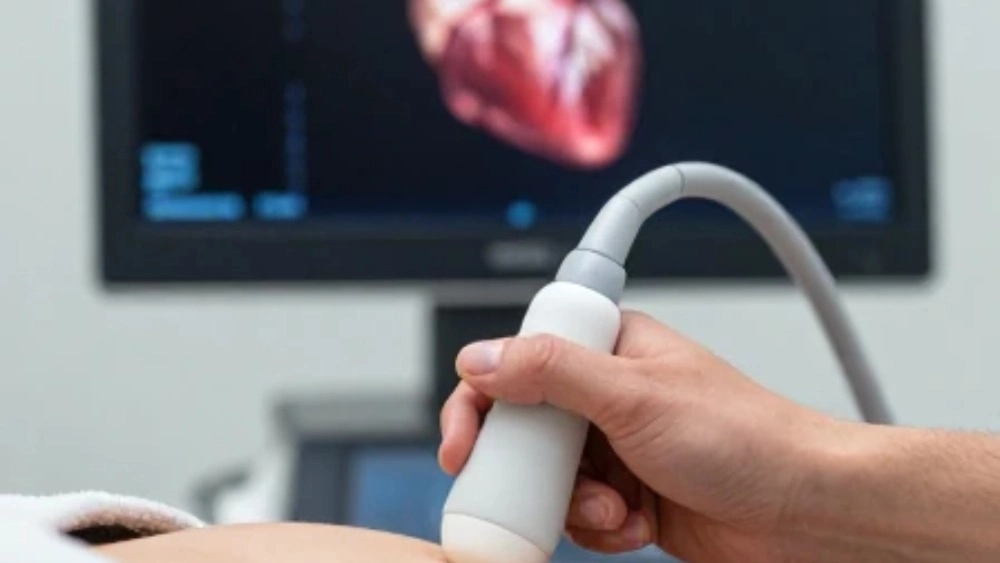
This is the most common type of echocardiography. In this method, the device probe is placed on the chest and sound waves are sent into the body. Clear images of heart structure, muscle movements and valve function are obtained. This type of echo is completely painless and takes about 30 minutes.
2. Transesophageal echocardiography (TEE)
In some cases, an echo esophagus is used to see parts of the heart that are not well defined on an echo surface. In this method, the device's delicate probe enters the body through the esophagus and provides more detailed images of the back of the heart. This type of echo is usually performed under local anesthesia.
3. Stress Echo
In this type of echocardiography, the function of the heart is checked during activity. The patient either walks on a treadmill or his heart rate increases with medication. The purpose of this test is to check the reaction of the heart to physical stress in order to detect blood flow disorders or vessel blockages.
4. Doppler Echo
Doppler echo allows the doctor to measure speed and direction and is often performed in conjunction with a conventional echo.
Steps to perform echocardiography of the heart
The process of heart echo is very simple and is usually done in specialized heart clinics. The work steps are usually as follows:
The patient lies on the bed.
Some special gel is applied on the chest to improve the contact of the probe with the skin.
The doctor moves the probe in different parts of the chest to record images from different angles.
During the echo, the patient does not feel any pain and can breathe easily.
After finishing the work, the results are checked on the monitor and then saved.
The whole process takes about 30 minutes and immediately after that the person can resume his daily activities.
Necessary preparations before echocardiography
There is no need for special preparation to perform conventional transthoracic echocardiography. Just wear comfortable clothes and remove jewelry from your neck and chest. But in some special types such as echo esophagus or echo stress, there is a need for more preparation:
For an echocardiogram, the person usually has to fast a few hours before.
In eco-stress, the use of certain drugs or caffeinated drinks should be limited.
Always follow the doctor's recommendations before doing an echo to get more accurate results.
Advantages of cardiac echocardiography
Echocardiography of the heart has many advantages and is one of the most widely used diagnostic tests in the heart:
No pain and no need for surgery
Fast and repeatable execution
High accuracy in diagnosing heart diseases
No risk for pregnant women and children
Possibility of observing the function of the heart and valves at a moment's notice
Possible risks or complications of echocardiography
Usually, echocardiography is completely safe and has no serious complications. Only in echo esophagus, a person may feel nausea or a temporary sore throat, which quickly resolves. In echo stress, sometimes an increase in heart rate or a temporary feeling of weakness is observed, which is normal and nothing to worry about.
برای تعمیر تخصصی دستگاه اکوکاردیوگرافی خود، با ما تماس بگیرید.
The difference between an echocardiogram and an electrocardiogram
The heart tape records the electrical activity of the heart and is useful for diagnosing arrhythmia or heart attack.
However, echocardiography shows the real structure and movements of the heart in an image and is used to evaluate the function of the valves and pumping of the heart.
Who should have an echocardiogram?
Echocardiography is usually recommended for people who have one of the following conditions:
Feeling shortness of breath or chest pain
Family history of heart disease
Abnormal heart sound or murmur
Swelling of limbs or chronic fatigue
History of stroke or heart surgery
Interpretation of echocardiography results
Echocardiography results are interpreted by a cardiologist. In the final report, the following items are usually checked:
The size of the heart chambers
The thickness of the walls of the ventricles
Heart contractile function and ejection fraction (EF)
The condition of the heart valves and the presence of leakage or stenosis
Pulmonary pressure and general heart function level
Decreased EF is usually a sign of weak heart pumping function, which is seen in heart failure.
Care after echocardiography
No special care is usually required after an echocardiogram. However, if the echo was performed through the esophagus, the doctor may recommend that you refrain from eating and drinking for about half an hour until the numbness of the throat is completely gone. If you have taken any special medicine or have any unusual symptoms, inform your doctor.
Echocardiography in pregnancy
Echo heart is a safe procedure during pregnancy. Gynecologists and obstetricians may prescribe fetal echocardiography in special cases, such as suspected congenital heart disease or fetal growth defects. This test helps check the heart health of the fetus in the mother's womb.
The cost of echocardiography of the heart
The cost of echocardiography varies depending on its type, medical center equipment and doctor's expertise. Normal Eco has a lower price, while Eco Meri and Eco Stress cost more. In many insurances, a part of the eco cost is covered.
Summary
Echocardiography of the heart or the same echo of the heart is one of the simplest, most accurate and safest methods of diagnosing heart diseases. Using sound waves, this method produces live images of the heart's function, which allows the doctor to identify problems such as insufficiency, narrowing of the valves, or poor pumping performance.
Many serious heart complications can be prevented by performing heart echo on time. If your doctor has prescribed an echocardiogram for you, feel free to do this test, as it is not only safe but also provides valuable information about the health of your heart.